
 Channing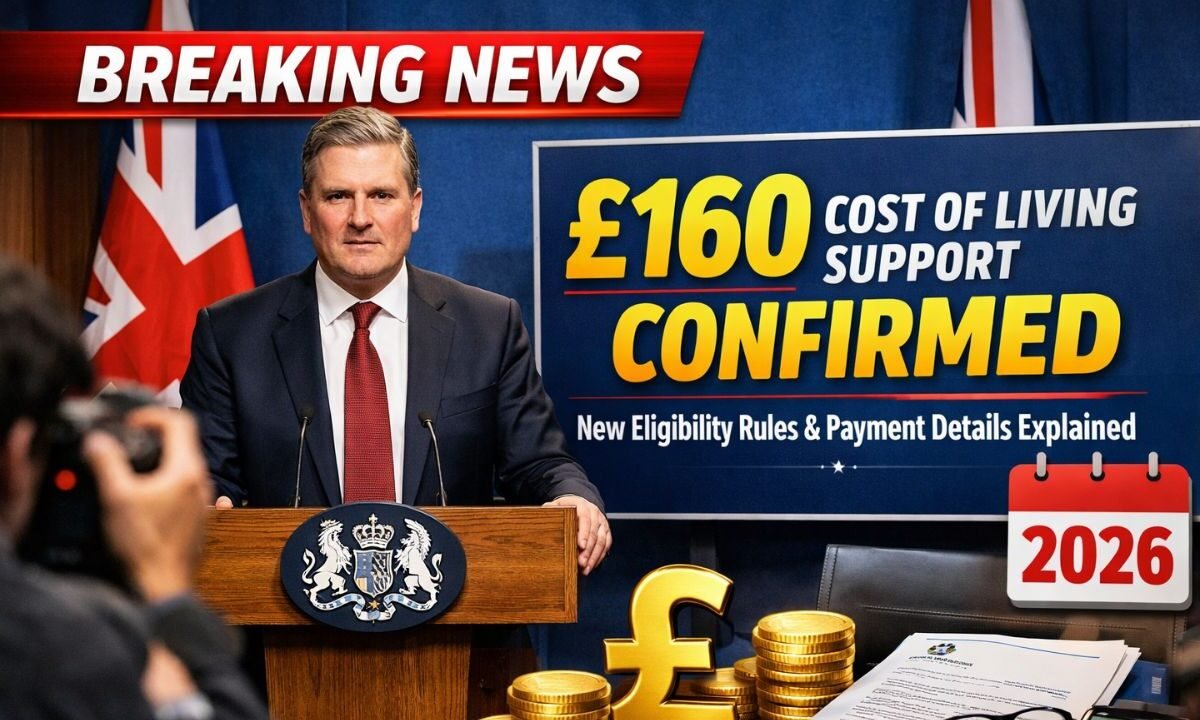
The UK government cost of living support continues to be an important topic for millions of households struggling with rising living expenses. Inflation, energy bills, food prices, and housing costs have increased significantly over the past few years, putting pressure on low-income families and benefit claimants.
To help vulnerable households manage these challenges, the government has confirmed £160 cost of living support, which forms part of broader financial assistance programs aimed at helping people deal with the ongoing economic pressure.
This financial support is particularly aimed at individuals receiving Department for Work and Pensions (DWP) benefits, pensioners, and low-income households who may be struggling with daily expenses.
What Is the £160 Cost of Living Support?
The £160 cost of living support refers to financial assistance provided through government and local support schemes designed to reduce the financial burden on households.
While the payment structure may vary depending on eligibility and location, the support is often linked to energy bill assistance, local council support programs, and government benefit adjustments.
This support helps households manage essential expenses such as:
- Energy bills
- Food and grocery costs
- Housing expenses
- Transportation costs
- Basic household necessities
The aim of this payment is to provide immediate relief for households facing financial stress during the continuing cost of living crisis.
Key Details of the £160 Cost of Living Support
| Feature | Details |
|---|---|
| Support Amount | Around £160 depending on scheme |
| Target Group | Low-income households and benefit claimants |
| Managing Authority | UK Government and Local Councils |
| Payment Type | Energy bill discount or financial support |
| Payment Method | Direct bank deposit or energy bill credit |
| Purpose | Help households manage rising living costs |
This support is part of the government’s wider plan to ensure vulnerable households receive help with essential living expenses.
Eligibility Criteria for the £160 Support
Eligibility for the £160 cost of living payment depends on household income, benefits received, and financial circumstances. In most cases, the support is aimed at individuals already receiving certain benefits.
Households that may qualify include people receiving:
- Universal Credit
- Pension Credit
- Income Support
- Employment and Support Allowance
- Income-based Jobseeker’s Allowance
- Housing Benefit
Some local councils may also provide additional support for residents who are experiencing financial hardship even if they are not receiving the above benefits.
Priority is usually given to:
- Low-income households
- Pensioners on fixed incomes
- Families with children
- Disabled individuals
- People facing financial hardship
Each council may have slightly different eligibility rules depending on local funding availability.
When the Payment Will Be Made
The payment schedule may vary depending on the specific scheme used to deliver the support.
In many cases, eligible households may receive support:
- Automatically through benefit payments
- As a credit on electricity bills
- Through local council support grants
- As direct payments to bank accounts
Some households may receive the support automatically if they already receive qualifying benefits, while others may need to apply through their local authority.
How to Claim the £160 Cost of Living Support
For many eligible households, the payment is automatically applied if they already receive qualifying government benefits.
However, if the support is provided through a local authority program, individuals may need to apply through their council.
Typical application steps include:
- Visit the local council website.
- Check eligibility requirements.
- Complete the application form.
- Provide proof of income or benefits.
- Wait for approval and payment confirmation.
Applications are usually reviewed within a few weeks, depending on demand and funding availability.
Why the Government Introduced Cost of Living Support
The UK government introduced various cost of living support measures after inflation and energy prices rose sharply in recent years.
Many households experienced increased expenses for:
- Electricity and gas
- Food and groceries
- Rent and mortgage payments
- Transportation
- Everyday household items
To reduce the financial pressure on vulnerable households, the government created targeted support programs including energy bill discounts, benefit increases, and cost of living payments.
These measures aim to ensure that the most vulnerable members of society receive support during periods of economic difficulty.
The £160 cost of living support confirmed by the UK government is designed to help households manage rising living expenses. Although the exact payment method may vary depending on the scheme used, the support is primarily targeted at low-income households and people receiving government benefits.
By providing financial assistance through energy bill discounts, benefit support, and local council programs, the government aims to reduce the financial pressure caused by rising living costs.
Households are encouraged to check their benefit status and local council programs to ensure they receive any support they may be eligible for.
FAQs
Who can receive the £160 cost of living support?
People receiving benefits such as Universal Credit, Pension Credit, Income Support, Housing Benefit, and Employment and Support Allowance may qualify.
Do I need to apply for the £160 payment?
Some payments are made automatically, but local council support schemes may require an application.
When will the £160 support payment be issued?
Payment timing depends on the specific support scheme, but many eligible households receive the support automatically through benefits or energy bill discounts.