
 Channing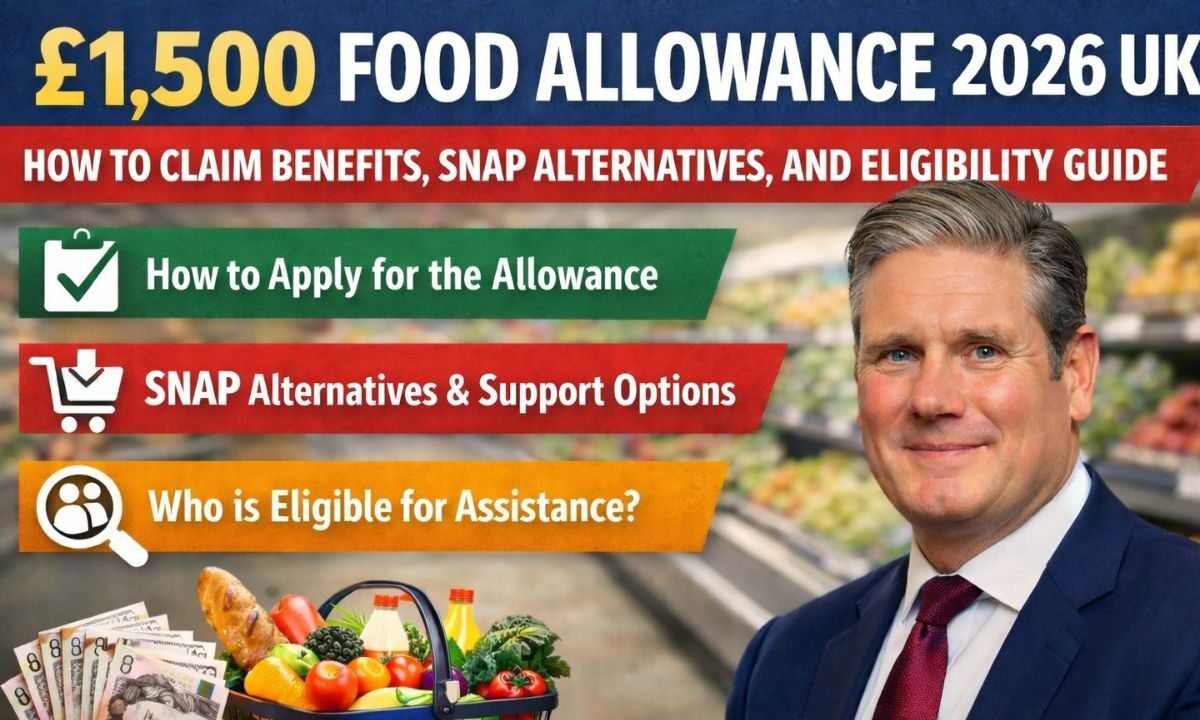
The £1,500 Food Allowance 2026 UK is a term being used to describe the combined value of food support available to low‑income households, families, children and vulnerable people in the United Kingdom this year.
Unlike the United States’ SNAP (Supplemental Nutrition Assistance Program), the UK does not have a single food stamp system. Instead, the UK provides multiple food support schemes and benefits that together can be worth around £1,500 in support value over the year.
This article explains who is eligible, how to apply, what support you can get, and the alternatives to SNAP in the UK.
What Is the £1,500 Food Allowance?
The UK Government and local councils continue to offer food support through a number of schemes in 2026. These include the Household Support Fund (HSF), Free School Meals (FSM), expanded school meal provision, and holiday food & activity programmes.
Although there is no single nationwide £1,500 cash payment for food, the support available from these combined schemes – including meal vouchers, childcare and school meal support – can reach a total value of around £1,500 per household per year, depending on eligibility.
The focus of these support programmes is to help families and individuals struggling with food costs, especially with rising living expenses.
UK Food Support Schemes in 2026
| Scheme Name | Support Provided | Estimated Value | Who It Helps |
|---|---|---|---|
| Household Support Fund (HSF) | Vouchers or payments for food & essentials | Up to £150‑£75 per round (varies) | Low‑income and vulnerable households |
| Free School Meals (FSM) | Free daily lunches during term time | Hundreds of pounds per child annually | Children from eligible low‑income families |
| Expanded School Meal Eligibility | Free meals for more families | Approx. £495 per child annually | Households on Universal Credit |
| Holiday Food & Activities | Free meals & activities during school holidays | Varies by council | Children eligible for FSM |
Who Can Claim Food Support in 2026?
The food support schemes are available to different groups of people based on income, benefits status, or circumstances:
1. Household Support Fund (HSF)
The HSF is run through local councils to help households who are struggling to pay for essentials such as food, utilities and other costs. People do not need to be on benefits to apply, but they must demonstrate financial hardship or lower income.
Councils set their own criteria and may require proof of income or expenses. Households with children, low incomes or bills they cannot meet are often prioritised.
2. Free School Meals (FSM)
Free school meals are available to children whose families receive certain benefits or tax credits. For many families, this can save hundreds of pounds a year in food costs by providing free lunches during school days.
From the 2026/27 school year, eligibility is expanding so that more families on Universal Credit will automatically qualify.
3. Holiday Food Support
Holiday programmes provide free meals and activities for children during school breaks. These are typically linked to families already eligible for free school meals, and help support nutrition and activity when school is not in session.
How to Apply for UK Food Support
Household Support Fund
You can apply for HSF support through your local council’s website or by contacting the council’s benefits and support team. Each council manages its own application process, eligibility checks, and award decisions.
Free School Meals
Applications for free school meals should be made through your child’s school or local authority. The school will generally request proof of benefits or household income to process eligibility.
Holiday Food & Activity Programmes
Information and applications for holiday food programmes are usually publicised through schools and local councils, especially ahead of school holiday periods.
SNAP Alternatives in the UK
Although the UK does not have a direct equivalent to SNAP, the combined food support schemes like the Household Support Fund, Free School Meals, and holiday food programmes serve a similar purpose.
These programmes help low‑income households access food support without direct monthly food payments like SNAP, instead focusing on targeted support based on need.
The £1,500 Food Allowance 2026 UK is not a single benefit payment but represents the total potential value of food support available to eligible families and individuals through multiple schemes.
By combining support from the Household Support Fund, free school meals, holiday food programmes, and expanded eligibility, many households can access meaningful help with food costs in 2026.
To make the most of these benefits, it is important to check eligibility early, gather necessary documents, and apply through the correct local channels.
FAQs
Is the £1,500 food allowance a direct government cash payment?
No, it is not a single cash payment. It refers to the total value of food support available through various UK programmes.
Who qualifies for free school meals in the UK?
Children in families on certain means‑tested benefits, including Universal Credit, can qualify for free school meals.
How can I apply for food support?
You apply through your local council for Household Support Fund help, and through your child’s school or local authority for free school meals and holiday food programmes.